Makar Sankranti arrives quietly, but it carries a lot of meaning.
The harvest is complete. The sun begins its northward journey. Homes feel lighter, warmer, and ready to share.
And with that comes a familiar question: What should I gift this Makar Sankranti?
Flowers feel thoughtful.
Sweets feel traditional.
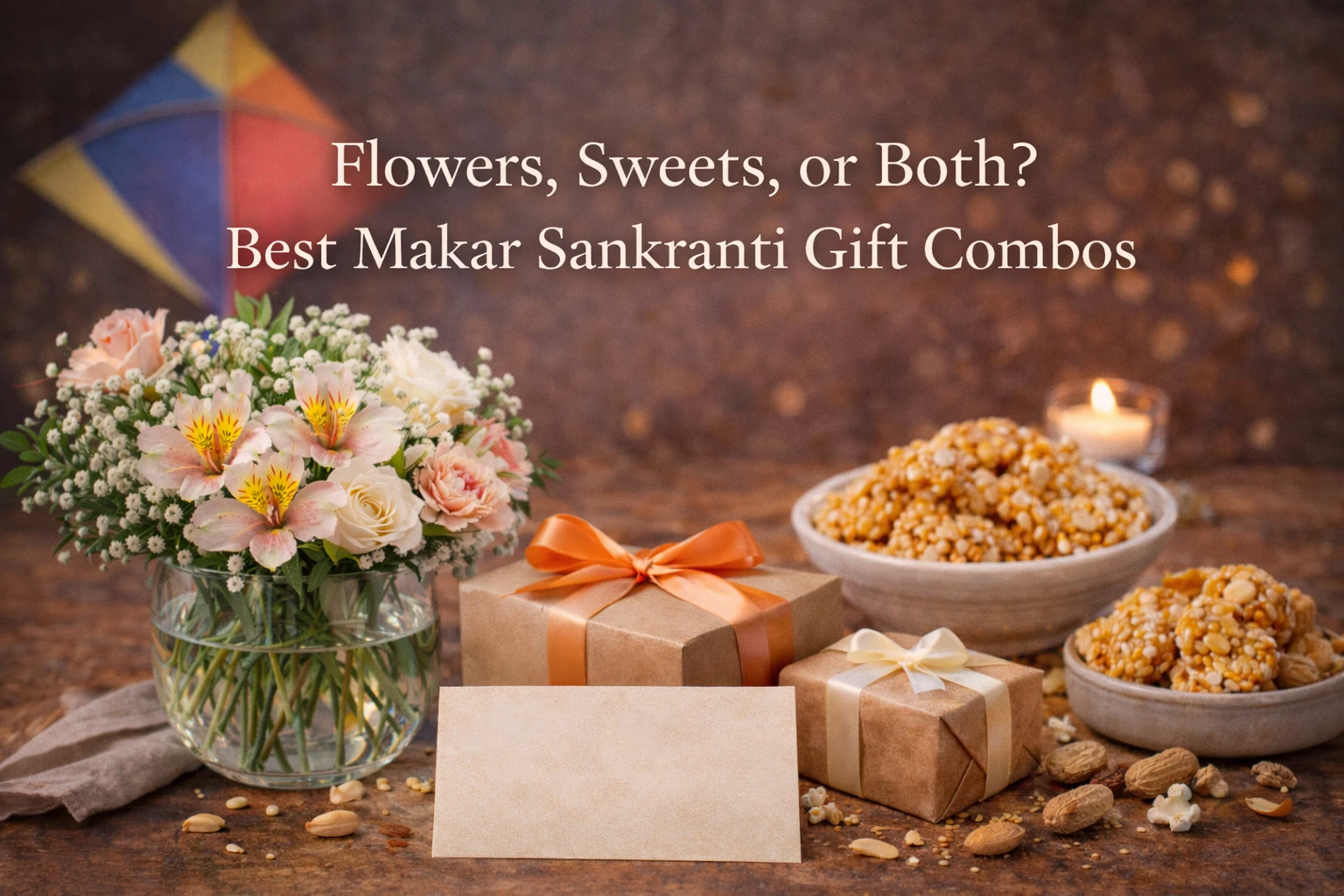
Both together feel safe—but are they always the right choice?
If you’re unsure whether to gift flowers, sweets, or a combination of both, this guide is for you. The goal isn’t to push one option—it’s to help you make a decision that actually fits the relationship, moment, and tone of the festival.
First, Understand the Mood of Makar Sankranti
Before comparing gifts, it’s important to understand what Makar Sankranti represents.
This is not a loud festival.
It’s not about grandeur or excess.
It’s about gratitude, balance, and new beginnings.
That means the best gifts:
Feel respectful, not showy
Carry cultural warmth
Are easy to give and easy to receive
With that in mind, let’s break down each option honestly.
Option 1: Gifting Flowers — When Meaning Matters More Than Ritual
Flowers may not be the most traditional Sankranti gift, but they’ve earned their place over time—especially in modern celebrations.
When Flowers Are the Right Choice
Flowers work best when:
You want a gentle, thoughtful gesture
The relationship values emotion over ritual
You’re gifting elders, hosts, or colleagues
You want something fresh, seasonal, and welcoming
They’re especially suitable when you’re:
Visiting someone’s home briefly
Acknowledging a festival without formality
Sending wishes from afar
The Strength of Flowers as a Gift


They feel present, not transactional
They suit the calm tone of the festival
They don’t impose—no storage, no obligation
Flowers say, “I thought of you today.”
They come from thought, not obligation.”
When Flowers Alone May Not Be Enough
Flowers might feel incomplete when:
You’re gifting to family elders who expect tradition
You’re attending a formal Sankranti gathering
The recipient strongly associates the festival with food and sweets
In such cases, yellow flowers on Sankranti are best paired rather than given alone.
Option 2: Gifting Sweets — When Tradition Takes Priority
Sweets are deeply rooted in Makar Sankranti celebrations. Til and jaggery aren’t just flavors—they’re symbols of harmony and warmth.
When Sweets Are the Right Choice
Sweets are ideal when:
You’re gifting elders or extended family
You want to stay close to tradition
The occasion feels ritual-focused
You’re gifting in bulk or within a community
They work particularly well when:
Visiting relatives
Exchanging gifts among neighbors
Celebrating Sankranti in a traditional household
Why Sweets Work So Well
They are culturally expected
They’re immediately understood
They feel celebratory, not symbolic
Sweets says, “We celebrate the same way.”
When Sweets Alone Can Feel Incomplete
Sweets alone can sometimes feel:
Predictable
Impersonal
Too routine, especially for close relationships
This is where many people feel their gift lacks emotional depth—even if it’s technically “correct.”
Option 3: Gifting Flowers + Sweets — Is It Always the Best Choice?
Combining flowers and sweets is often seen as the safest option—and in many cases, it is. But “safe” doesn’t always mean “best.”
When a Combo Makes Sense
A flowers-and-sweets combo works beautifully when:
You want to balance emotion and tradition
The relationship spans both warmth and respect
You’re gifting parents, in-laws, or close family
You’re sending a festival gift from afar
This combination allows you to:
Respect cultural expectations
Add a personal, thoughtful touch
Make the gift feel complete without being excessive
Why Combos Work So Well
Flowers soften the ritual
Sweets ground the emotion
Together, they feel intentional
A good combo doesn’t feel larger—it feels thoughtfully assembled.
When a Combo Might Be Too Much
A combo may feel unnecessary when:
The gesture is meant to be small
You’re gifting colleagues or acquaintances
The situation calls for simplicity
You want to avoid formality altogether
In these cases, choosing one strong option is better than combining two out of obligation.
How to Decide: A Simple Mental Checklist
Instead of asking “What’s the best gift?”, ask these questions:
Who am I gifting?
Elders, friends, colleagues, or hosts?What’s the setting?
Home visit, workplace, long-distance, or casual greeting?What tone feels right?
Traditional, warm, neutral, or celebratory?Do I want emotion, ritual, or both?
Your answers will naturally guide you:
Emotion → Flowers
Tradition → Sweets
Balance → Flowers + Sweets


What Matters More Than the Gift Itself
No matter which option you choose, these details make the biggest difference:
Timing (don’t gift too late)
Presentation (neat, not flashy)
A short, sincere message
Avoiding overcomplication
Makar Sankranti isn’t about impressing.
It’s about acknowledging shared warmth.
Final Thought: There’s No Wrong Choice—Only Thoughtful Ones
Flowers, sweets, or both—none of these are wrong.
The right Makar Sankranti gift is the one that feels:
Appropriate to the relationship
Respectful of tradition
Comfortable for both giver and receiver
When your gift feels natural to give, it will always feel right to receive.
And that’s the quiet beauty of Sankranti itself.